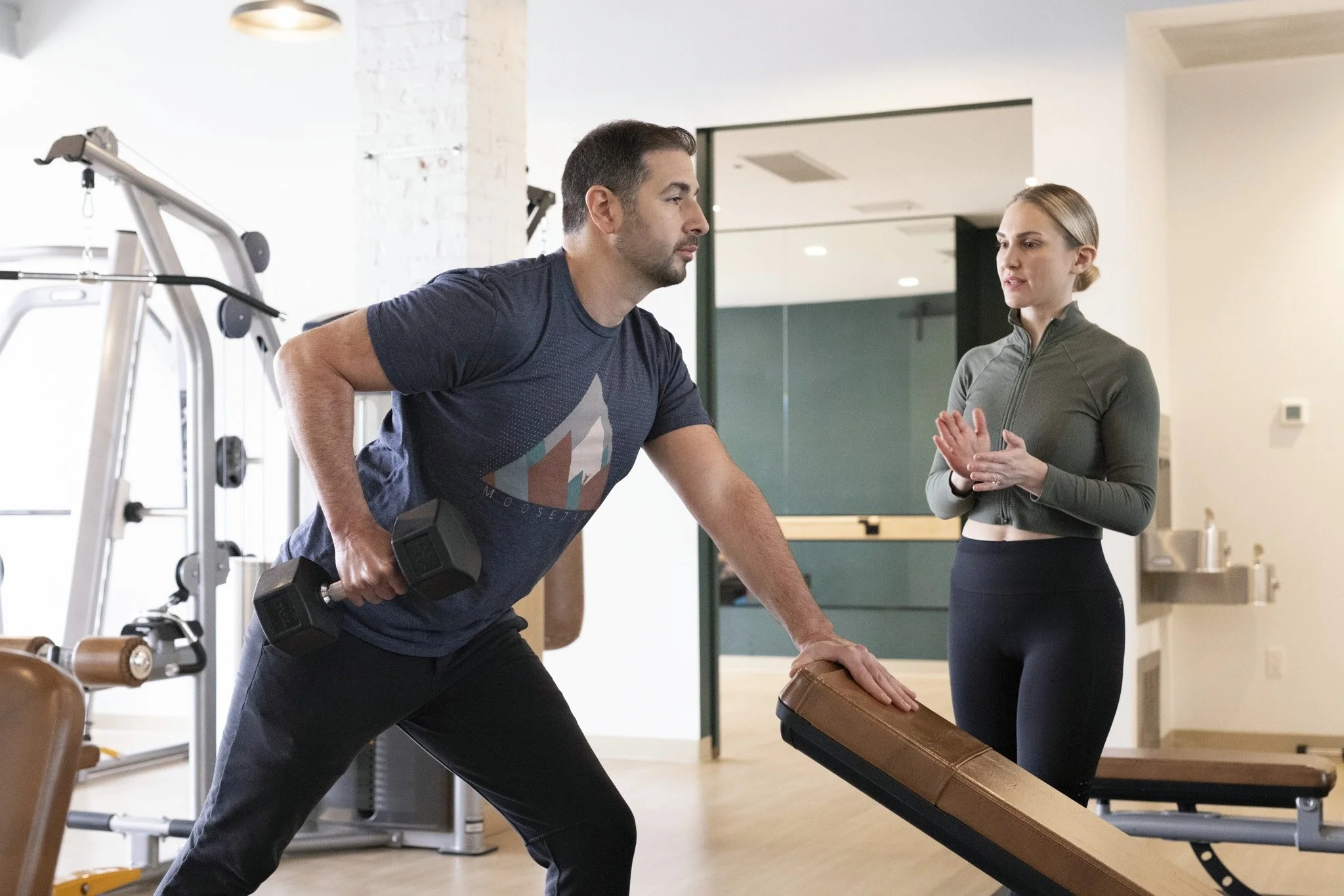
What Strength Training Actually Needs to Do for You at This Stage of Life
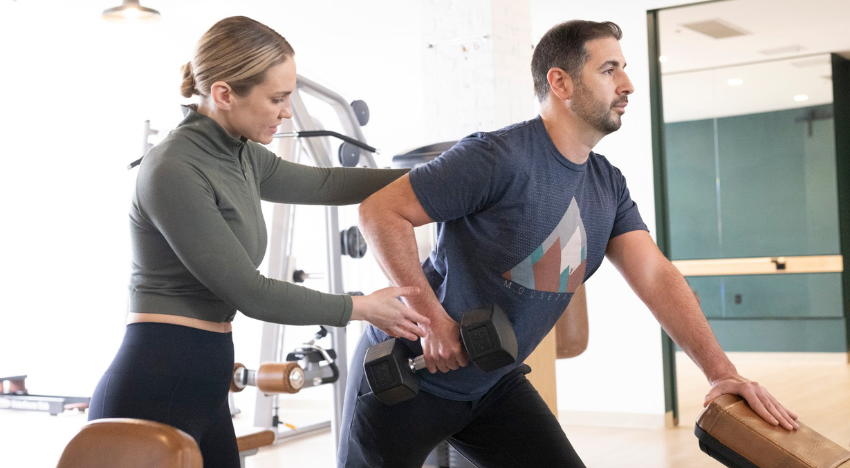
Here's something I've noticed after two decades of working with people on their bodies. The ones who are most frustrated with their fitness aren't the ones who don't know what to do. They're the ones who know exactly what to do — and still can't make it stick.
They've followed the programs, hired the trainers, done the research. And somewhere between knowing and doing, something keeps breaking down.
That gap isn't a discipline problem.
It isn't a motivation problem.
It's a relationship problem — specifically, the relationship between how you've been trained to think about your body and what your body actually needs from you at this point in your life.
Strength training is one of the most valuable things you can do for your long-term health. The research on this is unambiguous. But the way most people approach it — especially high-achieving people who apply the same intensity to self-improvement that built their careers — tends to undermine the very results they're after.
This is what I want to talk about.
THE OPERATING SYSTEM MOST PEOPLE ARE RUNNING
When capable, self-directed people decide to get serious about their fitness, they usually approach it the way they approach everything else that matters: comprehensively, ambitiously, and with full commitment.
They find the best program.
They schedule the workouts.
They track the metrics.
They push hard because small, slow steps have never been how they operate.
And for a while, it works. Until it doesn't.
What I've watched happen, over and over, is that the same qualities that make someone effective professionally — high standards, intensity, the ability to push through resistance — become the exact things that undermine their health and fitness long-term. They train too hard too soon, especially after time off.
They don't recover because recovery feels like wasted time. They measure progress by effort rather than adaptation. And when results stall or the body starts pushing back, they either redouble the intensity or abandon the whole thing.
Neither response is the problem. The operating system is the problem.
Training your body at midlife isn't a project you execute and complete. It's an ongoing conversation between you and a system that is changing — that has different needs, different recovery requirements, and different signals than it did ten years ago. The framework that produces results here, with your changing body, is not the same framework that produces results in a boardroom. And the sooner that distinction is made clearly, the sooner training starts actually working.
WHAT STRENGTH TRAINING IS ACTUALLY FOR
Strength training is not primarily about aesthetics. I want to say that plainly, because the aesthetics conversation dominates so much of the fitness space that it's easy to lose sight of what's actually at stake. This is especially true in the dawning of the new skinny age. I cannot stress enough how much more important it is to have muscle than it is to be skinny.
At midlife and beyond, consistent strength and resistance training is one of the most evidence-backed interventions available for long-term health. It preserves lean muscle mass, which begins to decline meaningfully after 35 if you don't actively work to maintain it. It supports bone density. It improves insulin sensitivity and metabolic function. It protects joints. It maintains the neuromuscular connections — the coordination between your nervous system and your muscles — that determine how capable and resilient your body feels in everyday life.
In plain terms: it determines how well you move, how much energy you have, how your body handles stress, and how much functional capacity you carry into the decades ahead.
That's the real argument for strength training. Not what it does to how you look — what it does to how you live.
THE SHIFT THAT CHANGES EVERYTHING
Most people train against their body. They use training as a way to override what the body is doing — to burn off excess, to compensate for other choices, to punish or control or push through.
The shift that produces lasting results is learning to train with your body instead of against your body. To treat it as a system that responds to intelligent stimulus — that needs adequate challenge to adapt, adequate recovery to rebuild, and adequate awareness to be trained in a way that's sustainable over years rather than weeks.
This sounds simple. It isn't, particularly for people whose relationship with their own body has been characterized by years of overriding its signals in favor of performance. Learning to actually listen — to distinguish between productive discomfort and genuine warning, between the need to push and the need to rest — is a skill. One that takes time to develop, and one that no program can give you.
This is where training and inner work intersect. The physical framework matters — the right structure, the right progression, the right recovery. I've put together a detailed blueprint for exactly that, which you can find here. But the framework is only as useful as your capacity to work with it honestly.
That's what ARVAmethod ACTIVE is built around. Not a program to execute, but a structured support system that helps you develop the consistency, self-awareness, and body literacy to make the framework actually stick — in your real life, not an idealized version of it.
The clients I've worked with who've built something truly sustainable — who are stronger and more capable at 50, 60, and even 85 than they were at 40 — didn't get there by finding a better program. They got there by developing a better relationship with their body. ACTIVE is where that work begins.
WHAT THIS MEANS PRACTICALLY
You don't need to train every day. You don't need to push to your limit in every session. You don't need to overhaul your entire routine to see meaningful progress.
What you do need is consistency over intensity, structure over ambition, and enough self-awareness to know the difference between a body that needs to be challenged and a body that needs to recover.
The minimum that actually moves the needle — two solid strength sessions per week, progressive in their demands, paired with daily movement that keeps your baseline activity high — is more achievable than most people realize. The ideal is a little more than that. But the gap between minimum and ideal is much smaller than the gap between minimum and nothing, which is where most people end up after their latest ambitious reset burns out.
Start where you actually are. Build something your life can hold. Let it grow from there.
That's not the slow path. It's the only path that goes anywhere
If you're trying to get a clearer picture of how your patterns around health and self-care are shaping what's possible for you, the Living Archetype Quiz is a useful place to start. And if you want the full framework — the structure, the progressions, the blueprint for training effectively at any level — that's here: [link to Post 2 / Blueprint page].